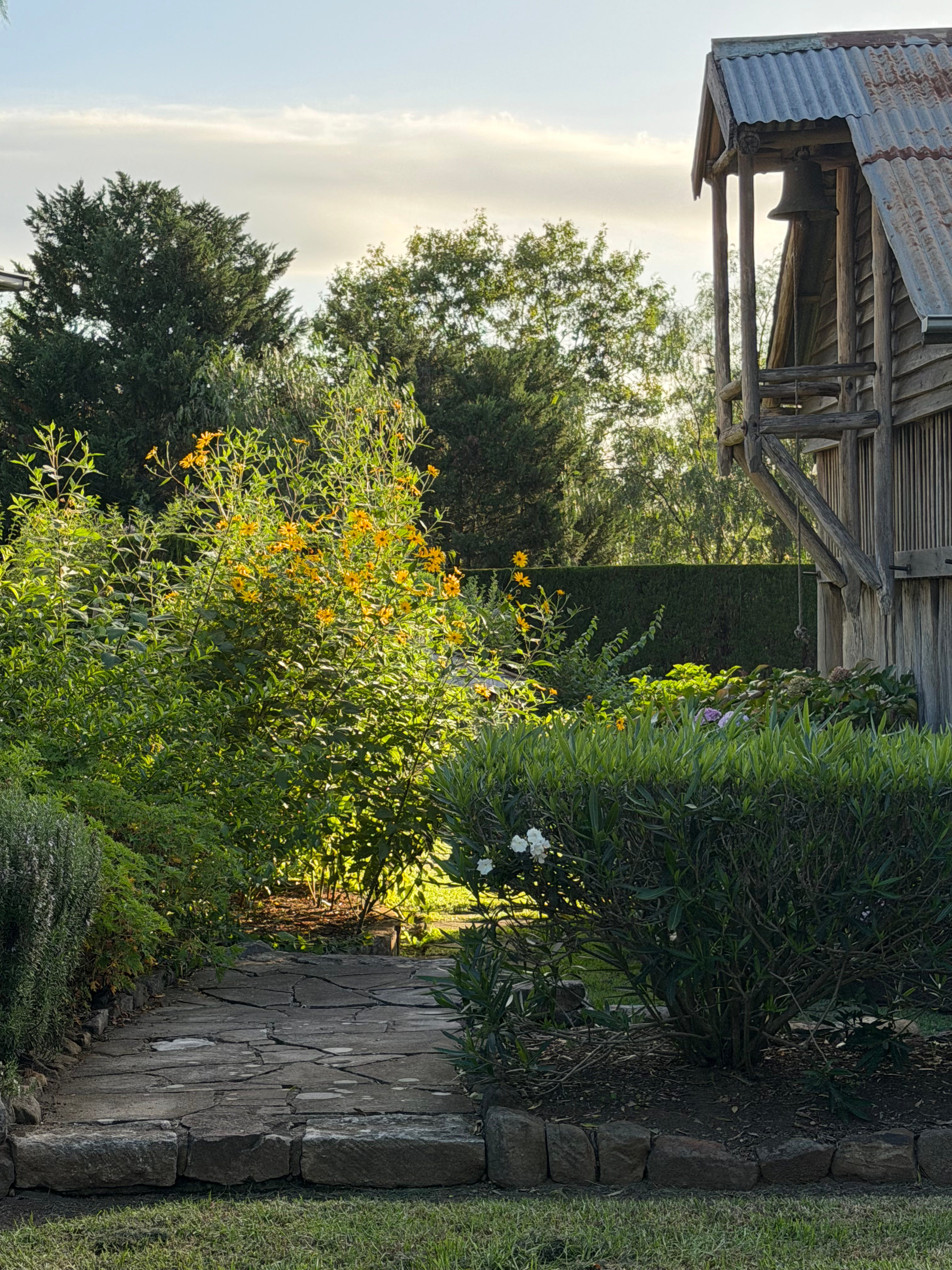
On SOIL...
but it all begins with the compost...

When I think back to our earliest days here at Glenmore…I can honestly tell you I had no idea about soil. (I often wonder in fact, if I had any idea about life at all!). I grew up in an urban environment - one where sure, we ‘went to the park’, ‘went to the beach’ and I was lucky those parks were the like of Centennial and the Botanical Gardens - each offering a multitude of different kinds of ‘gardens’ within their vast spaces (how I loved threading my way through the rose beds at Centennial Park as much as playing hide & seek amongst the Paperbarks, Melaleuca); as well as idling away hours in hidden treasures like Gladswood Gardens, tucked-in as it is, to the harbour shoreline; with chinks visible through enormous trees to the sparkling waters below…that one in particular, felt like my very own secret garden, and was perhaps where the earliest seeds of my future love of gardens were sown…aged 3, 4, 5…6. We must have continued to visit (my grandparents lived very close by) as I distinctly recall holding onto the waistband of my younger brother’s trousers when he wasn’t much more than a toddler, as he tried to catch tadpoles in the pond (which is still there!). “Don’t let go of him”, Nanna would say (he’s 6&1/2 years my junior!).
Combined with an early enchantment of illustrated nursery rhymes: “Mary, Mary quite contrary, how does your garden grow?” I can still visualise the illustration that accompanied that particular one, with the bonneted toddler holding her watering can so very clearly in my mind’s eye, a little bed of flowers edged by shells…all of which is a million miles in time…from first plunging my hands into the soil here.
And when I did…I just dug a hole into the bare clay. I mean…what did I know? Luckily I didn’t plant much at the very beginning! There was no point…it was all about clearing…for there was a great deal to clear, in order to discover the bones…which came in the form of a handful of disparate buildings, each of which had clearly performed its function once upon a time, with the purpose of serving the daily life of an inter-generational dairy. Oh those buildings had character, of that there was no doubt. But it had been a long time since Glenmore had operated as a farm…and we were not farmers. And so…at the beginning, rescuing the buildings (which we fell instantly in love with) before they were completely beyond repair, took precedence over making a garden; much as I was itching to make a start.
I’ve often mentioned the book my paternal grandmother gave me: Esther Dean’s “Growing without Digging”. It was hugely sensible of her (for she was sensible: my 16th birthday present I clearly remember was the book of “Common Sense Cookery”). Of course Esther Deans’ isn’t a particularly pretty book (the kind of which I was quickly accumulating!), but it did more than pique my interest, for luckily…I inherited some sense of sensibility along the way, and realised that in revealing Esther’s good advice to me, my grandmother had given me the greatest gift in those pages: that of gleaning some understanding of how things actually grow, before I’d made what might have been a very false start. (Incidentally she’s the one who was called Enid, ref. our new pair of chooks, and decided when I was about 10, because she now had several more grandchildren - my younger cousins, that she would like to be known henceforth as GrandE).
And so it was that every garden ‘bed’ here was made by implementing Esther’s ‘no dig’ principles. Layers of cardboard, newspaper…as well as gypsum to help break down the clay, and with load after load (Larry had bought a ute very early on) of compost. We were so lucky in the early days, that ‘Jensen’s Garden Centre’ was literally at the end of our little road…with bays of hot compost ready to go. It’s many years since I’ve learned it oughtn’t to have been so hot, or smell the way it did, which was quite a pong, but one that honestly? I just loved! This love of shovelling stuff onto beds, of tucking in new plants, felt the equivalent of tucking children into bed…all snug as bugs…in the knowledge I was enhancing the clay sub soil so it would better absorb and hold nutrient as well as water, alongside encouraging a plethora of micro-organisms to flourish. It was only later, as I learned more from discovering the principles of biodynamics, and with evermore conversation about the environment and the significance of carbon sequestration whirling, that I realised the true significance of what we were doing, in our own small way. With the addition too, of mulch over the compost, we were protecting and nurturing our precious soil; and the roots of our new plantings were contributing their newly forming roots to the mix, creating air passages: in doing what we were, we were encouraging a whole underground environment that we couldn’t see, to flourish…and in return, that underground activity…for it is active…was supporting the beauty that we could see, above.
But in those early days, before we truly had our systems sorted, and before I learned more about closed-loop-cycles, we had to buy compost in. My early attempts at making the stuff seemed futile; and it was only when I truly got to grips with the cycles of the kitchen garden here, that I declared enough was enough, and we must do this properly. The thing is, we are gardening here on a large scale; and making compost with the amount of material we accumulate, is not something I can do alone (well…if I didn’t have other things to do like work…maybe!).
I recall seeing an event for a talk in Sydney being publicised, with the then head gardener to (then) Prince Charles, at Highgrove, specifically about the significance of compost and the part it plays in the growing of the Duchy of Cornwall’s renowned organic produce. I dragged Larry along (it is often not enough my bleating on about something - I need back-up!). Another event at Mulloon Creek in the Southern Tablelands of NSW, added more grist to my mill; as did another illuminating evening talk in Sydney with early-regen-farming advocate Joel Salatin; and slowly, slowly, I could see Larry coming around to my way of thinking. Although I couldn’t persuade him to join me at various biodynamic events with Charlie Arnott and Hamish McKay (later hosting events here with those two well-informed mavericks!), Larry’s enthusiasm did eventually rise to a point where he began to ask if we would be turning the compost at the weekend? It may take time and patience…this business of persuasion…but ‘tis worth the agony of it! And I know I’m not alone…these are the kinds of conversations I’ve had with so many attendees at kitchen gardening days here over the years!
If I’ve lost you so far on this post with this composting tangent, I apologise! But it’s a topic to which I simply must make reference from time to time, because it’s the stuff upon which this garden grows. But more than that, it is the stuff upon which our own health relies. The adage “you are what you eat” can only go so far; for indeed the food you eat, is made up of the substance in which it grows. So what your soil is made of…is everything.
How I love the quote Laura Dalrymple of Feather & Bone coined: “You are what your food ate”. At least I think it was Laura’s doing and certainly the only place I’ve ever seen it!
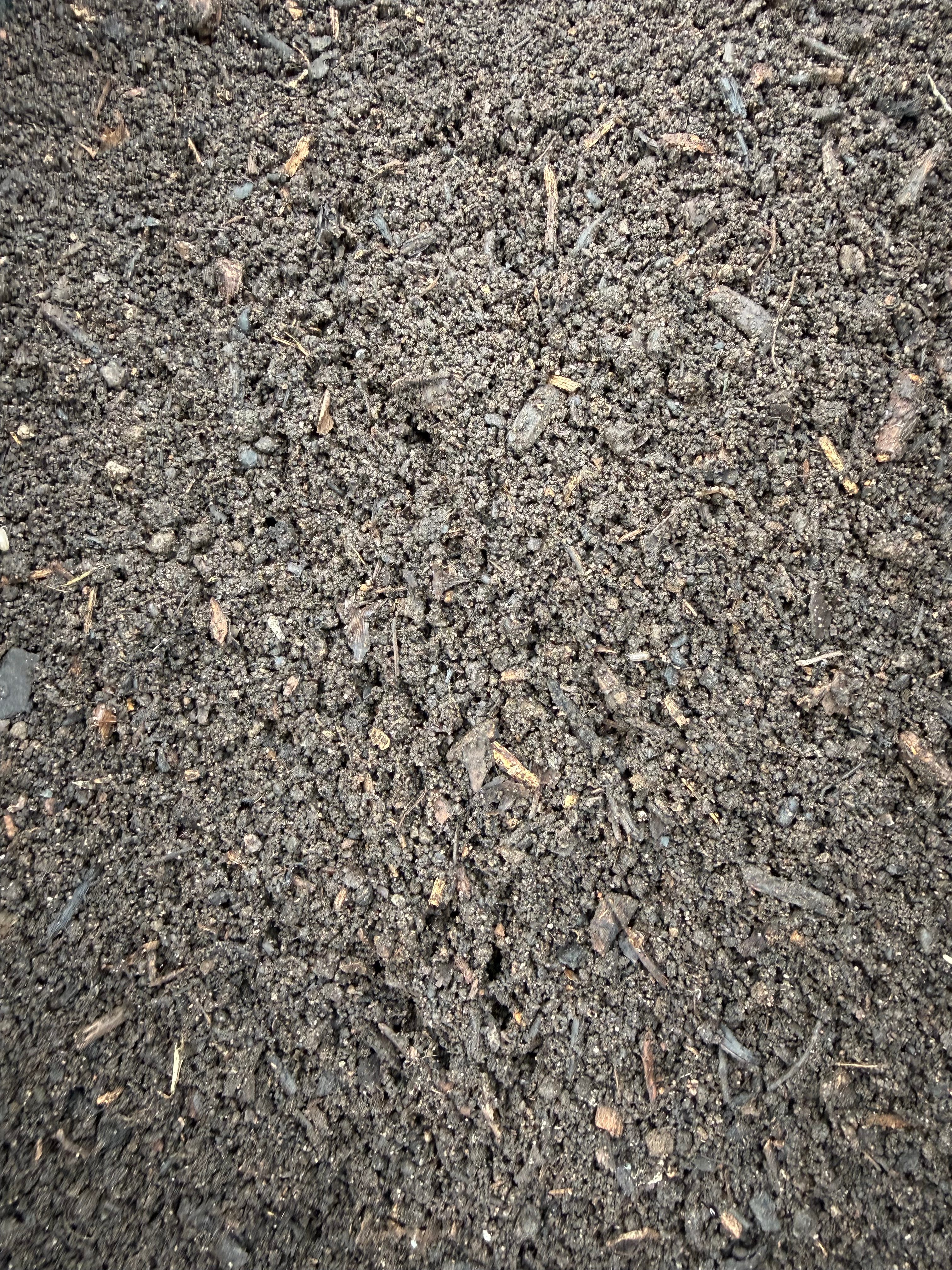
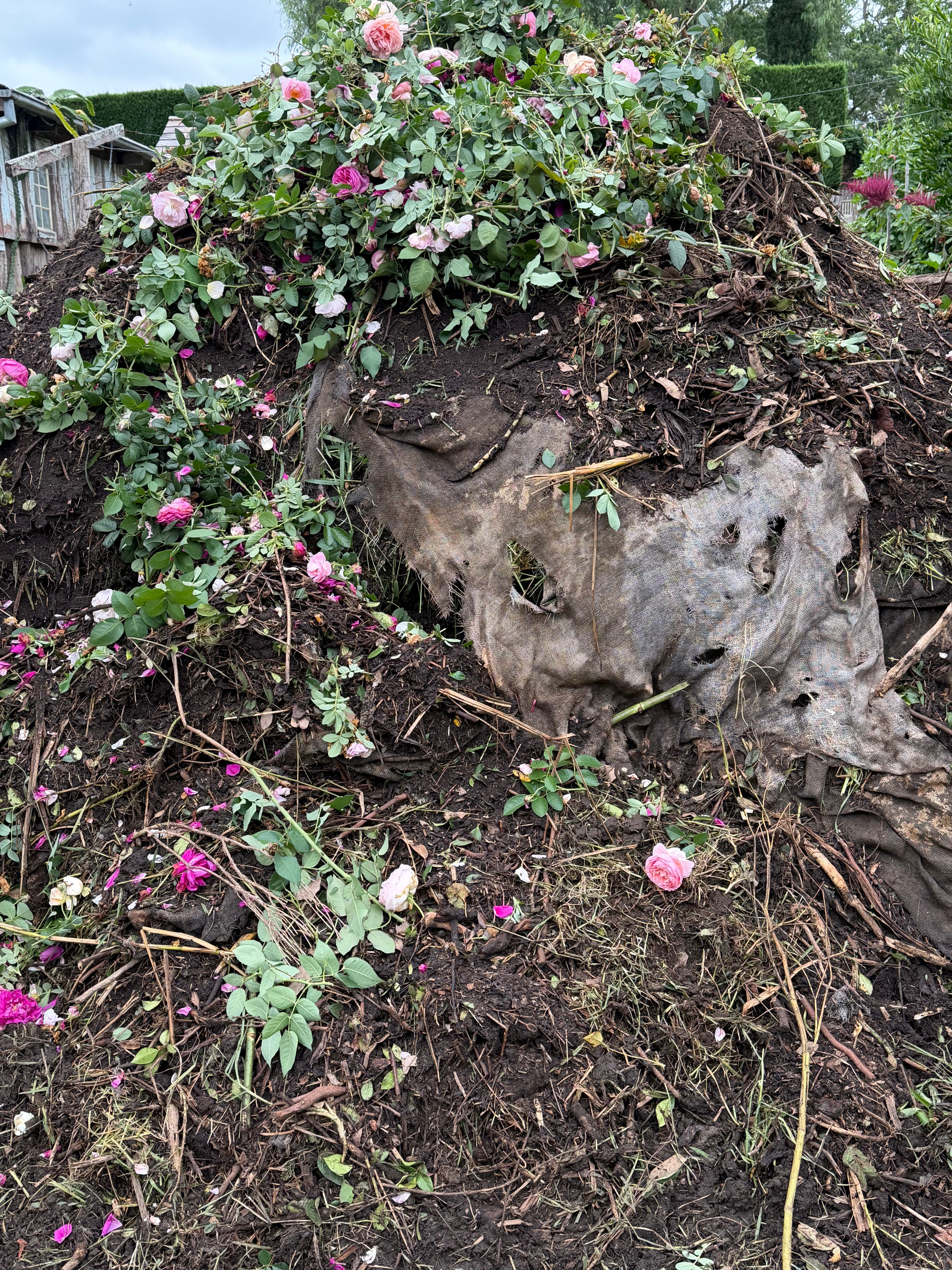
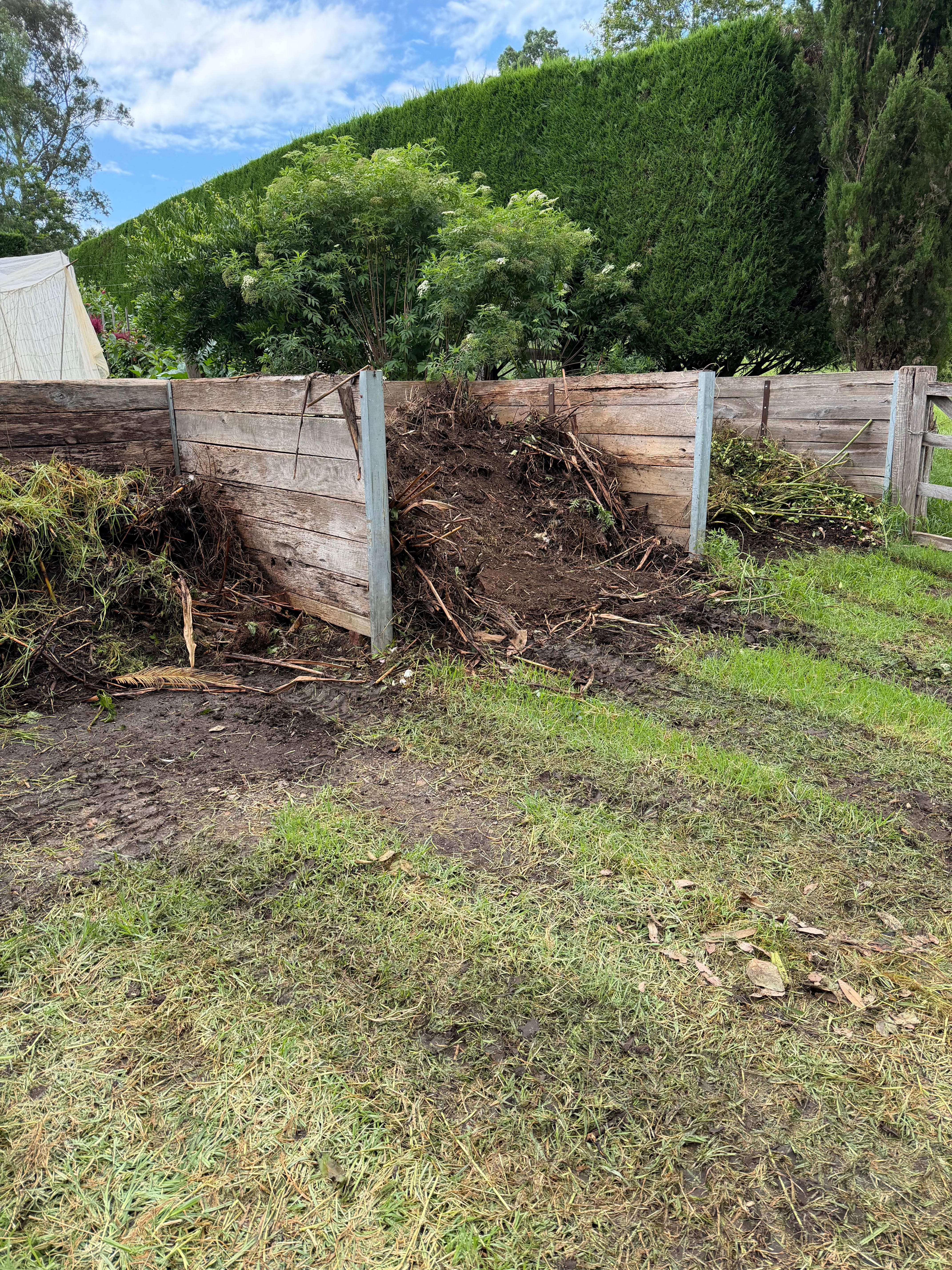
And so it is that…every six weeks or so, we ‘turn the compost’. During the intervening weeks, it’s inevitable material from all over the garden will accumulate - a handful here, a barrow load there; and at some point, we (well…I!) will deem it to have reached the turning point. The heap you see in the top image will have no more fresh material added…it’s already made up of a heap once turned as well as new material. It will be turned a couple more times before it’s ready to use. In the meantime, we emptied the bay from where I’ve been using the last of the compost from the previous batch into the mower trailer…from where I’ve been taking buckets as I begin the process of crop rotation in the kitchen garden…and turned the most recent heap for its last time, into the bay that’s always the final resting place…the one from where we know we can always find all the compost we need…beautiful and black as 90% cocoa!
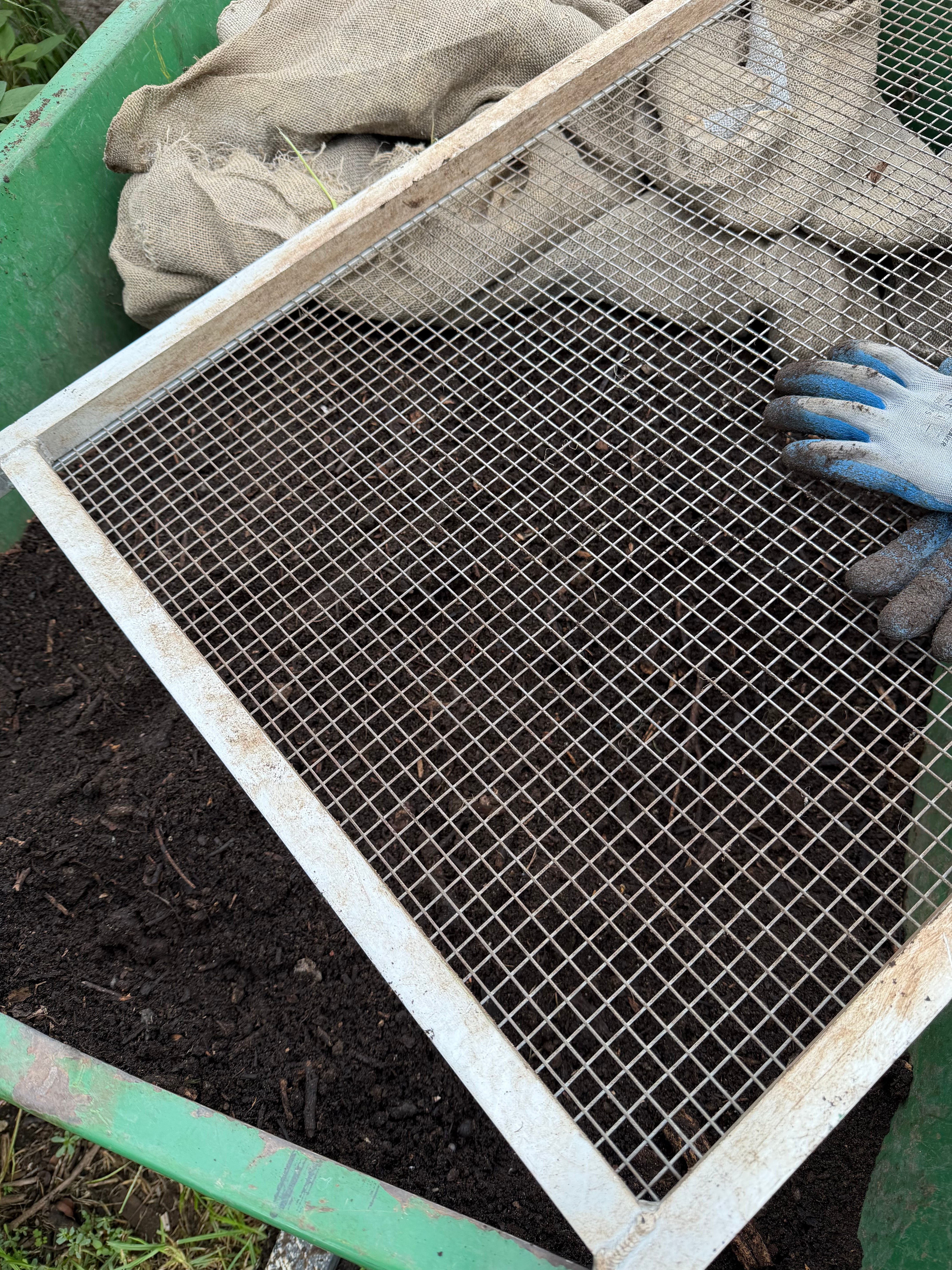
To get it to that point, I run it through a wire panel…like a sieve, to remove any larger, twiggy material, for we put pretty much everything into our compost, and some of the thicker pieces don’t break down as quickly as others - it’s all in there - from the strappy to the feathery, the substantial to the flimsy. Anything that hasn’t broken down, just rejoins the next heap on the go…it will break down eventually.
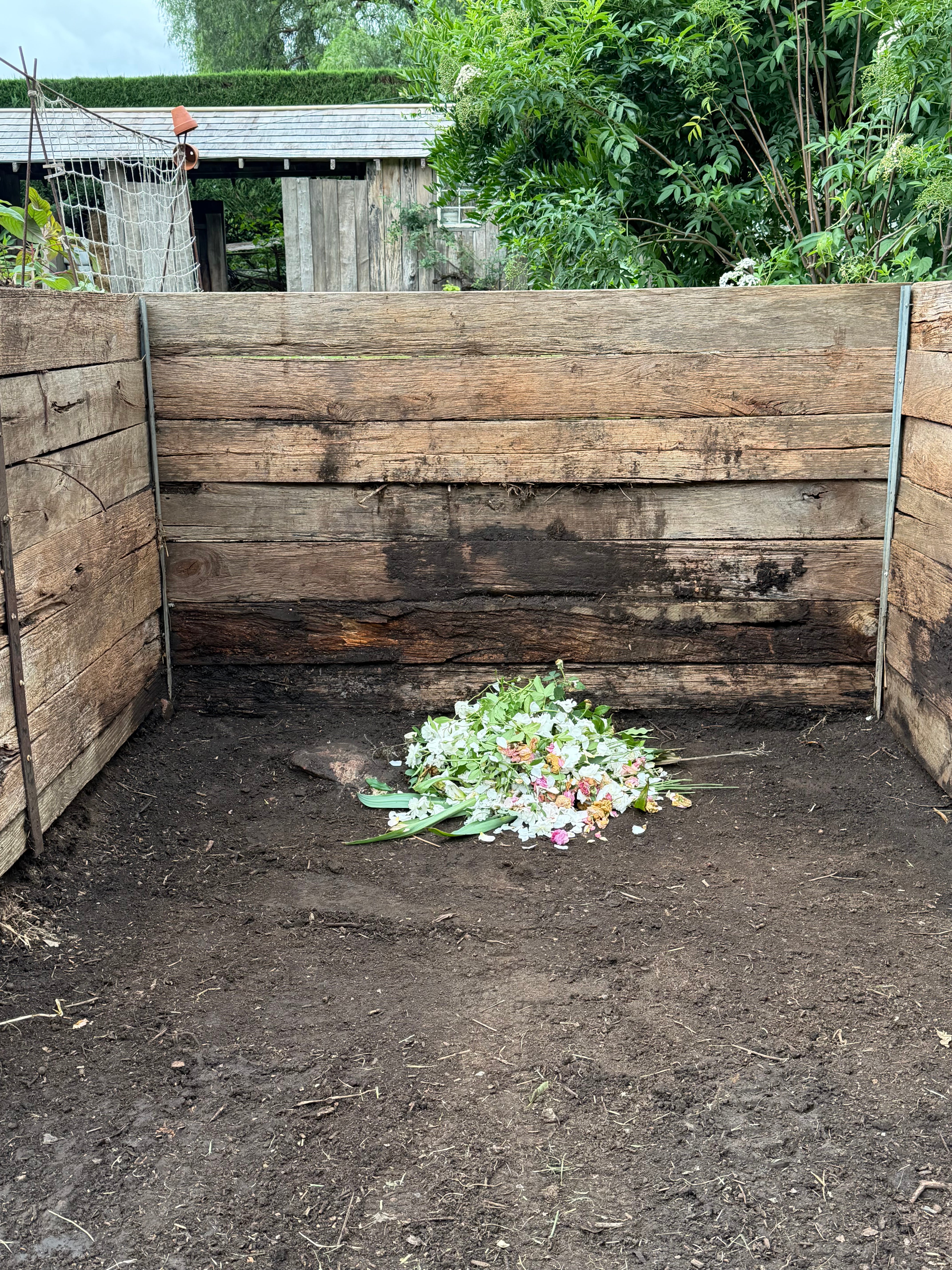
With a good job done, and everything neat and tidy down in the compost bays…I went off to deadhead the roses. It’s long been a Sunday afternoon rose-season activity, that I thoroughly enjoy. When the girls were little, they’d follow me with my barrow around the garden, picking off all the petals and throwing them in the air like confetti; and what was left, has always been the final flourish to finish off a Sunday compost heap…whether it’s been turned, or not!
There’s so much reading you can do on the topic of soil…I thoroughly recommend Matthew Evans’ ‘SOIL’; Nicole Masters’ ‘For the Love of Soil’ and of course, The Land Gardeners’ ‘Soil to Table’. Had I begun substacking when I had Bridget and Henrietta here for an event? I have a funny feeling I hadn’t…but I have a feeling I’ve written about it on this platform? In case not, here’s a link back to the insta post! Oh what fun I had loading handfuls of our compost into the pretty soup tureen (best contents I reckon, it may ever have held!). And let us not forget those two fabulous films that we screened here year before last: Six Inches of Soil and Thankful for Soil, the last produced by Suzannah Cowley…and another event at which I set little terracotta pots filled with compost down the lunch tables…the only way I know how to tackle the art of gentle soil persuasion!
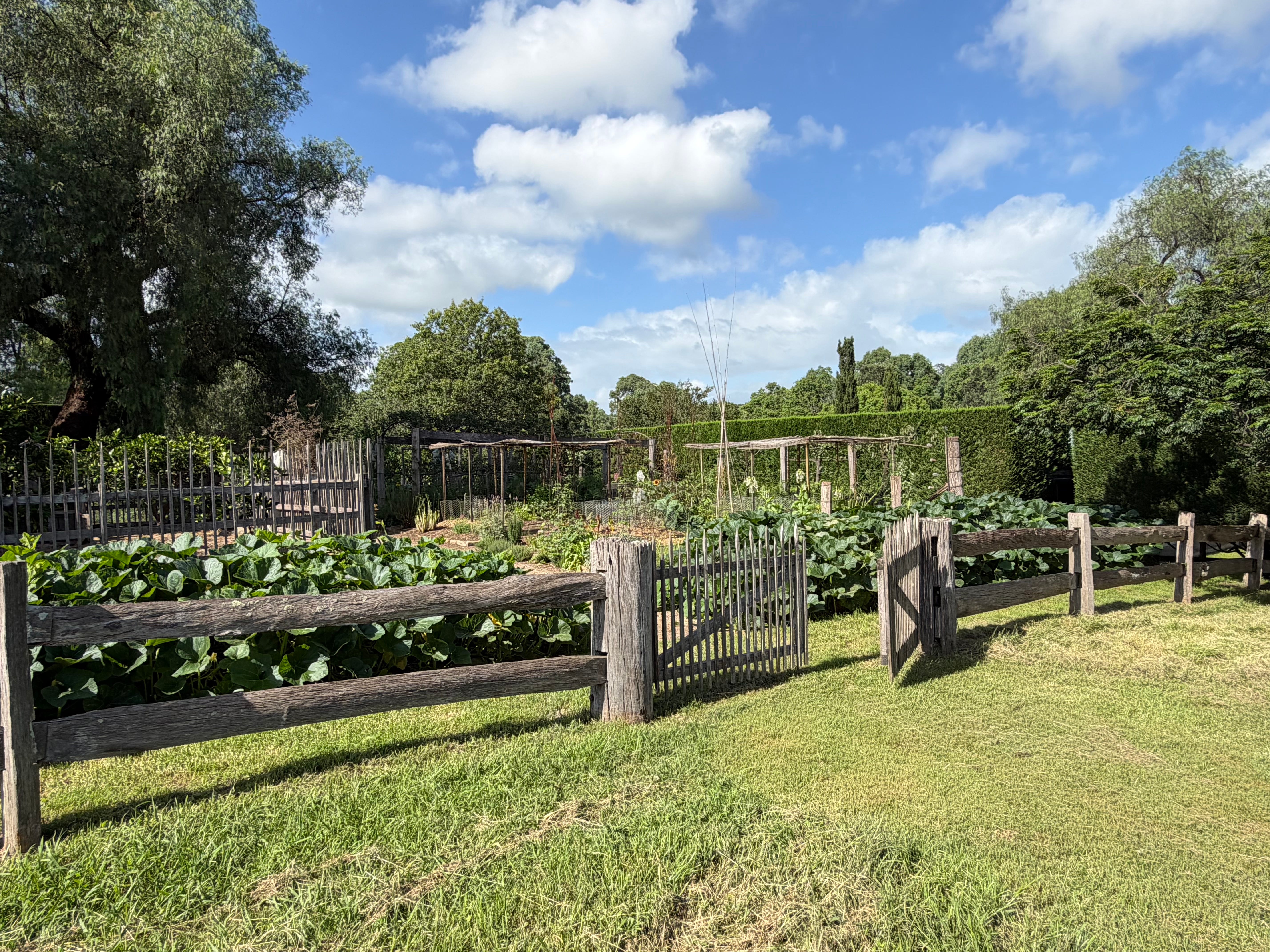
I cannot tell you how expansive the kitchen garden feels, now the surrounding tall stems of fennel have been cut down. Romantic as it was…and cling to the last of the fennel cycle as I’m always inclined to do…the garden can breathe again now. The fennel played a significant part in protection from the elements though, during those searing heatwave days - it’s just one of the reasons I leave it in place so long; but now I literally need to Let the Sunshine in! (Sorry…couldn’t help it - at least you can’t say I’m stuck in a musical rut!).
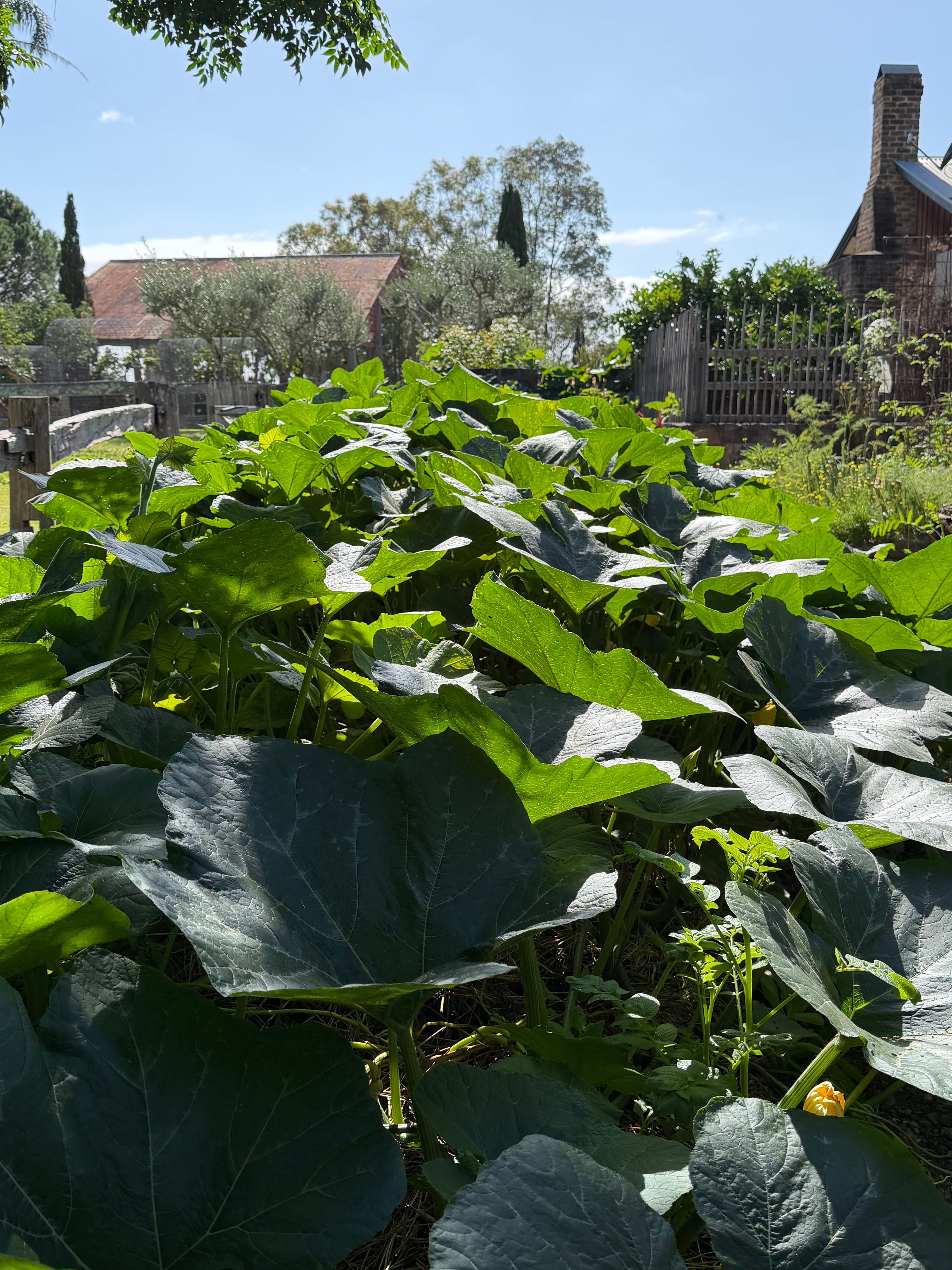
While the pumpkin vines have taken on a gargantuan, sea-like froth of growth that is making me feel like some comedic, tiny, cartoon-like figure in their presence; in the traditional beds proper, I’ve begun an overhaul; interplanting autumn/winter-growing brassicas and the first fennel seedlings of the season. I picked up some lettuce seedlings too, at the market last weekend, but have yet to have a moment to plant them, so this weekend, I’ll be making good use of what remains of the compost in the trailer (I don’t like to leave it removed from the earth for any longer than is absolutely necessary) and bedding those in too.
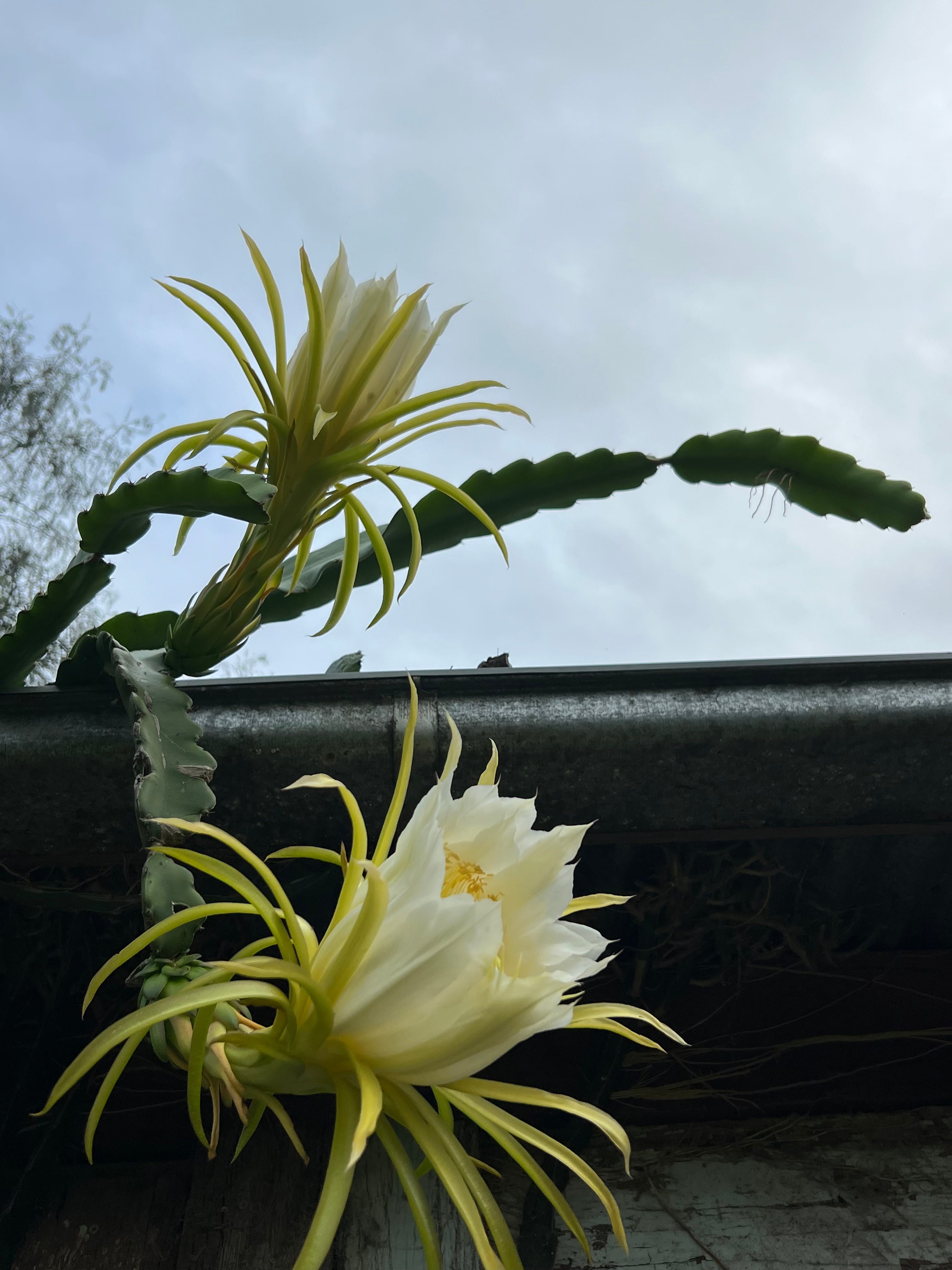
With a quick glance back to last week’s post…I have confirmation that the Epiphyllum that caused me to stop and gawp in amazement, was indeed from Camden Park: Selenicereus undatus (Dragon Fruit); and comes with the warning of being very vigorous! At risk of causing a great rush at their next open garden in September…at least I’ve given Edwina warning that her specimen may be high on the wish list of visitors to buy! I’ll let you know more details closer to the time!
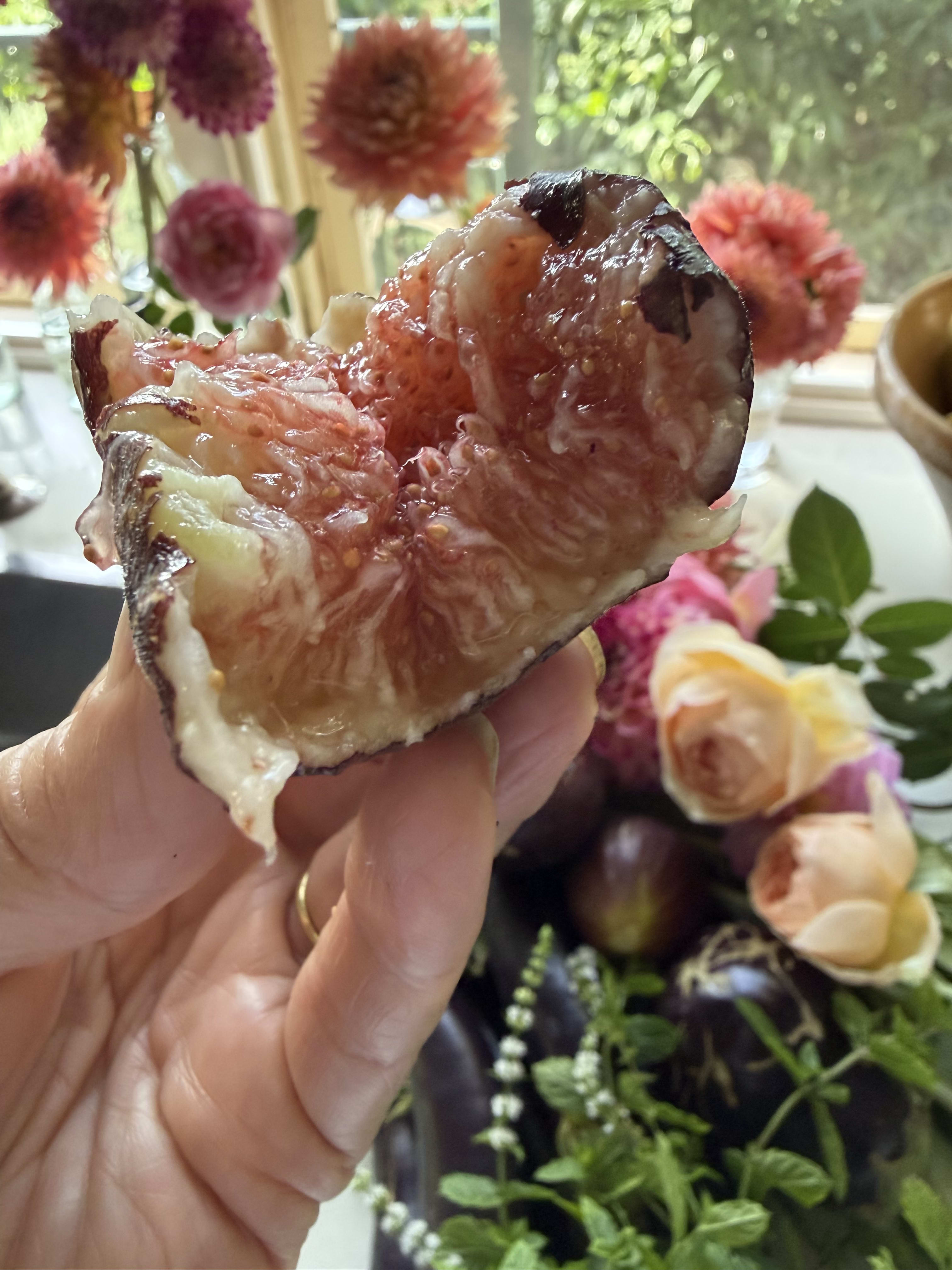
The fig-gluttony season continues…though this afternoon I sense a change…has the last evening swim been had? As the sun began to dip yesterday, with beads of sweat collecting on my brow as I sat at my desk, I couldn’t resist nipping down to the pool, where great gulps of osmanthus fragrans mixed with jasmine, frangipani and fig leaf aroma hovered over the water, trapped within the ironbark fence, nowhere to go in the still air…
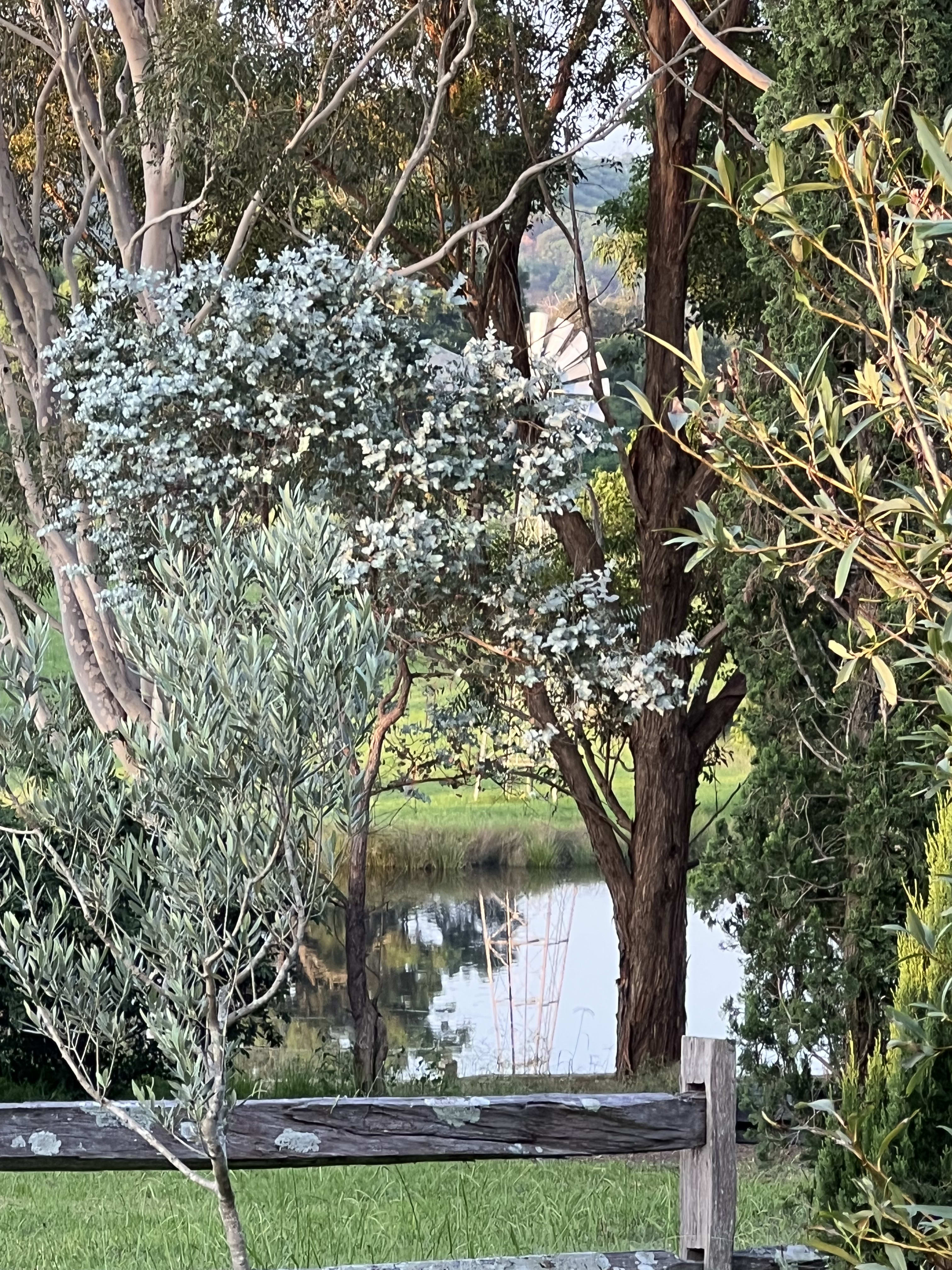
Dripping, I watched the blades of the windmill spin in the near distance…when the puff of breeze diminished, its frame reflected perfectly in the still waters of the dam below…
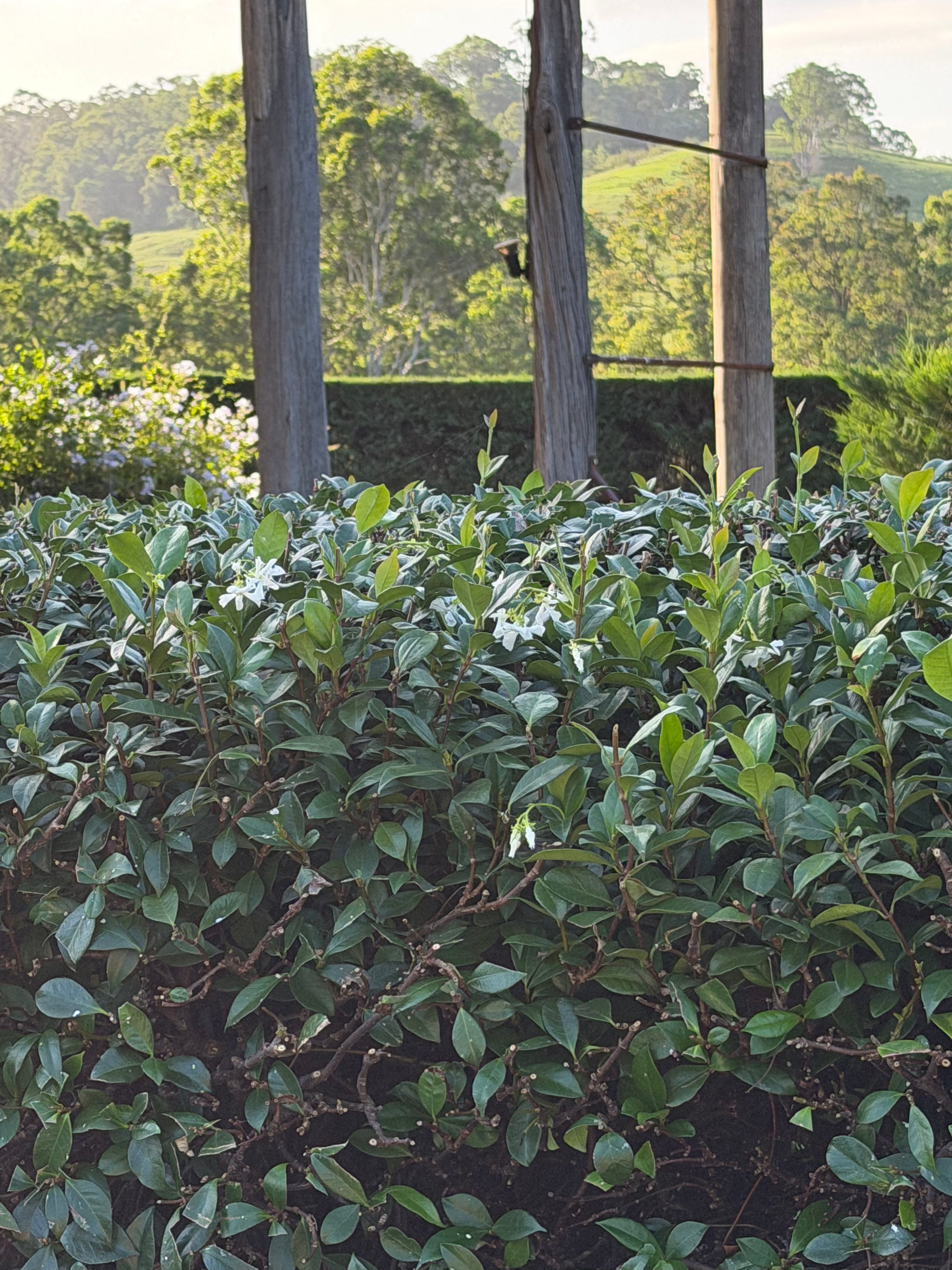
Revelled in the golden light falling on Big Hill, glimpsed through the tall poles of the Hay Shed…
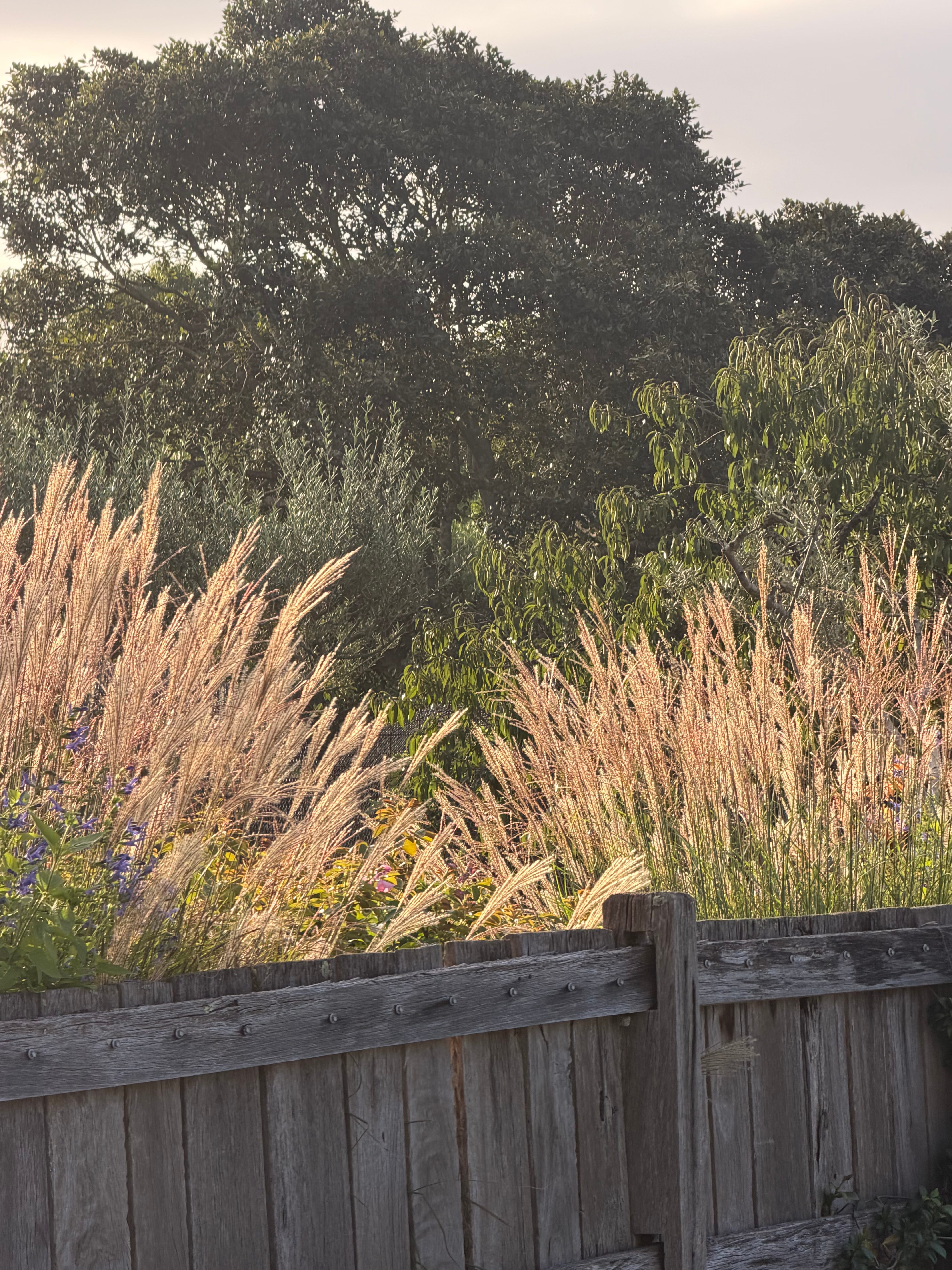
And the shimmering grasses and olive leaves, backed by the immensity of the Port Jackson Fig. I sent Larry a message - “do you remember when we stood on this spot, feeling utterly exposed, with a naked view all the way to the house on the hill way over in the distance?” “I do” he replied…
When we put the pool in, there was no garden. In its way, the size of that tree represents the years I’ve had my hands in the soil, in the compost…that makes the garden grow.
‘Til next week…as together we face tumultuous times.
With warmest wishes,
Mickey x
Eating from the garden:
Aubergine (my oh my are we eating aubergines) and zucchinis! Cucumber, tomatoes, warrigal greens, coloured chard, mizuna, chicory, lettuce, rocket, garlic and onions (the last two stored from the spring harvest). Corn…I can’t say they’re my finest cobs, but those kernels are peculiarly addictive when you start eating them in the garden! Figs, rhubarb. Lovage, mint, chives, parsley, rosemary, sage, thyme, oregano, new season nasturtium leaves and basil. There would be fruits of the Jelly Wine Palm if I could reach them…
Going / gone: Carrots (hopefully there are more coming!); beans (although the later sown are growing well, so there may be a second flush) and though I’ve had potatoes listed here for awhile and we finished eating the main crop, so many random plants have popped up from years gone by, there may well be more ahead…
Seed saving: carrot, parsnip, bean, fennel
Sowing: I still think it’s a little too early…though perhaps some cima di rappa…
Planting: kale, broccoli, cabbage, kohl rabi, fennel, lettuce…it’s time to think autumn/winter growing
Ornamental garden notes:
Picking for the house: dahlias, roses, ginger, frangipani, gardenia
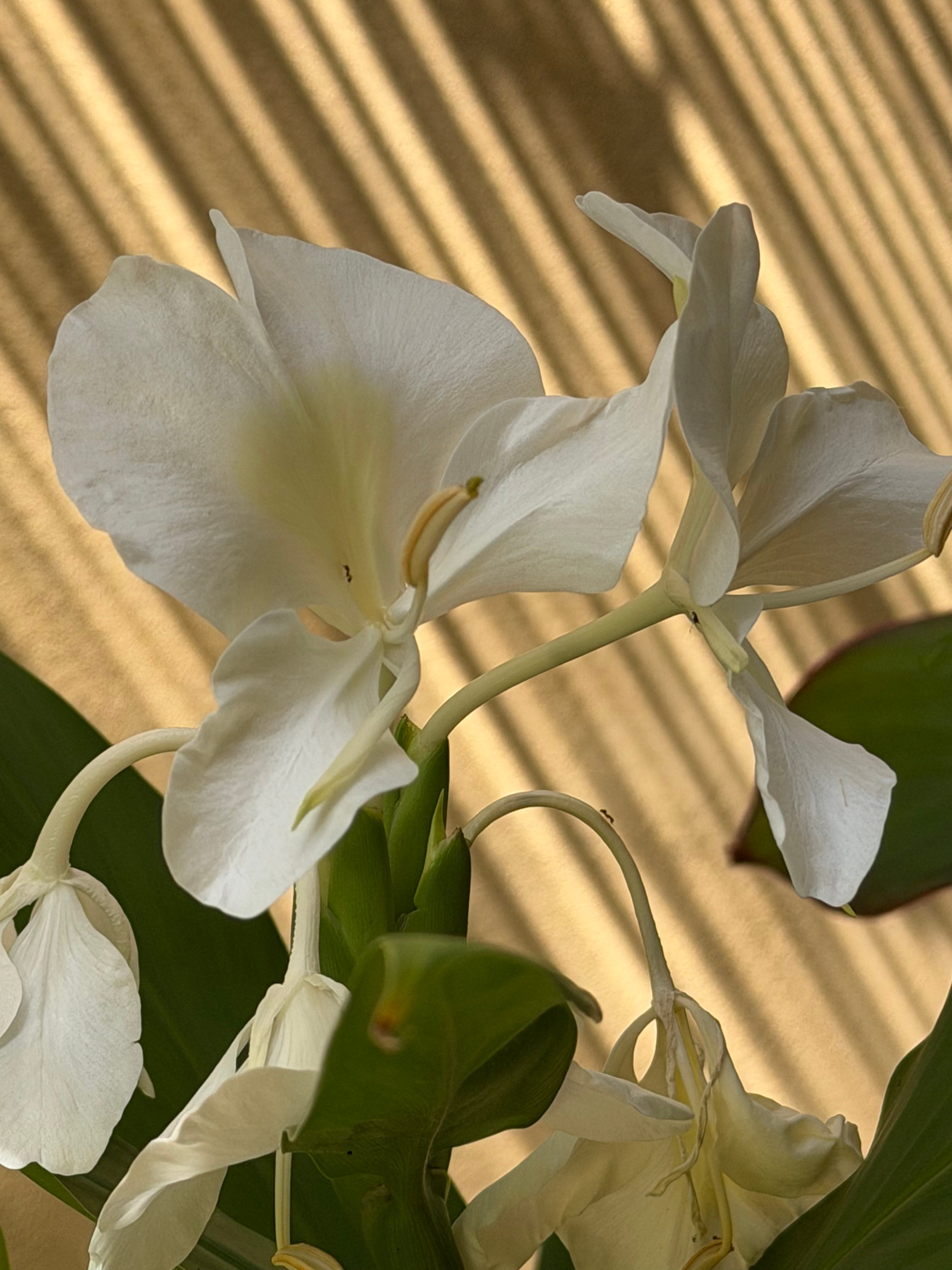
Perfumes and aromas: rose, frangipani, ginger, fig leaf, lavender (a new flush), gardenia, port wine magnolia, Osmanthus fragrans, night-scented Jessamine, Chinese star jasmine…and this week the first delicate flowers of Hedychium coronarium the white-flowering ginger and surely…this must be the perfume that fills heaven…?
Pruning and other: the remaining fennel stems in the two ‘box frames’ are now upended in a bid to encourage new seedlings where the established plants have become a bit thin on the ground and the first round of Tansy flowers have been cut to the base of their stems. Lawn gutters have been cleared of weeds and around the orchard trees too. Larry has done a lot of edge-strimming and mowing! But that season is drawing slowly, to a close methinks!